This is part four of the seven-part series debunking Ray's Atheist Test available at the Living Waters Ministry. Part two and three have been reserved for later. This one is not as succinct as the first part as I included 2-3 versions of it.
Have you taken a look at The Atheist Test which you can purchase for $12.00 to give to your atheist friends to convert them to theists (there are no arguments for Christianity)? I printed it out and took it and, I must say, I was spectacularly underwhelmed and must have passed the test as I am still an atheist (since it is a test for atheism).
In response to this, I have created a new series of posts entitled The Theist Test. This will be a direct response to The Atheist Test and will use the same logic against theistic beliefs. A commenter on that page wrote that:
Thank you very much. It is logically laid out from The Word, identifying characteristic denials of fact to explain the world within which we live.I wonder if others will find this series as "logically laid out" as it will use the same fallacious arguments and approaches. Do note that these are not necessarily arguments against God or creationism; these are arguments against Ray's faulty logic, dishonesty, and false analogies.
Absolute Knowledge of One God
The declaration "There is only one god" is what is known as an absolute statement. For an absolute statement to be true, I must have absolute knowledge.
Here is another absolute statement: "There is only one nugget of gold in China."
TEST FOUR, B
What do I need to have for that statement to be true?
A. No knowledge that the one nugget exists.
___ YES ___ NO
B. Faith or conjecture that the one nugget must exist.
___ YES ___ NO
C. Knowledge that the one nugget exists.
___ YES ___ NO
What do I need to have for that statement to be true?
A. No knowledge that the one nugget exists.
___ YES ___ NO
B. Faith or conjecture that the one nugget must exist.
___ YES ___ NO
C. Knowledge that the one nugget exists.
___ YES ___ NO
If you answered "C," you are correct about the part of the statement that the one nugget exists. But wait! The claim "there is only one nugget of gold in China" is a two fold question.
TEST FOUR, C
What do I need to have for that statement to be true?
A. No knowledge of China.
___ YES ___ NO
B. Partial knowledge of China.
___ YES ___ NO
C. Absolute knowledge of China.
___ YES ___ NO
What do I need to have for that statement to be true?
A. No knowledge of China.
___ YES ___ NO
B. Partial knowledge of China.
___ YES ___ NO
C. Absolute knowledge of China.
___ YES ___ NO
"C" is the correct answer. For the statement to be true, I must know that (a) the one nugget exists, and (b) there is no other gold in China except for the one nugget, or the statement is incorrect. To say "There is only one god," and to be correct in the statement, I must be omniscient.
We can make an analogy to gold regarding god as "gold" and "god" differ by only one letter. But how else do "gold" and "god" differ? Gold is a natural substance. We have knowledge that natural substances exist and knowledge that gold exists. So to take the question that "there is only one nugget of gold in China" is actually requires three knowledge criteria:
a) Gold exists.
b) One nugget of gold exists in China.
c) No other nuggets of gold exist in China.
God also differs from gold as god is supernatural. We have no knowledge that anything supernatural exists or knowledge that any god exists. So to take the question "there is only one god" actually requires, in the very least before proceeding to the two other questions, knowledge that something supernatural exists.
I must know how many hairs are upon every head, every thought of every human heart, every detail of history, every atom within every rock...nothing is hidden from my eyes...I know the intimate details of the secret love-life of the fleas on the back of the black cat of Napolean's great-grandmother. To make the absolute statement "There is only one god." I must have knowledge that there is at least one and absolute knowledge that there is no other god besides that one.
 Let's say that this circle represents all the knowledge in the entire universe, and let's assume that you have an incredible 1% of all that knowledge. Is it possible, that in the knowledge you haven't yet come across, there is ample evidence to disprove that a god does indeed exist? Or, isn't it possible, that in the knowledge you haven't yet come across, there is ample evidence to prove that more than one god exists?
If you are reasonable, you will have to say, "Having the limited knowledge that I have at present, I believe that there is a god and that there is no other god." In other words, you don't know if god exists much less only one god, so you are not a "theist," you are what is commonly known as an "agnostic." You are like a man who looks at a biological organism and says there was no biological process to produce it. You are as foolish as the man who thinks that every person in the world was manufactured, instead of produced through sexual reproduction.

Absolute Knowledge of no Flying Spaghetti Monster
 This section, along with the revised commenting rules, is dedicated to The Skeptical Sorcerer. It is Ray's original tract with a straight replacement of God with Flying Spaghetti Monster as Ray's "logical argument" could be applied to anything and everything.
The declaration "There is no Flying Spaghetti Monster" is what is known as an absolute statement. For an absolute statement to be true, I must have absolute knowledge.
Here is another absolute statement: "There is no gold in China."
TEST FOUR, A
What do I need to have for that statement to be true?
A. No knowledge of China.
___ YES ___ NO
B. Partial knowledge of China.
___ YES ___ NO
C. Absolute knowledge of China.
___ YES ___ NO
What do I need to have for that statement to be true?
A. No knowledge of China.
___ YES ___ NO
B. Partial knowledge of China.
___ YES ___ NO
C. Absolute knowledge of China.
___ YES ___ NO
"C" is the correct answer. For the statement to be true, I must know that there is no gold in China, or the statement is incorrect. To say "There is no Flying Spaghetti Monster," and to be correct in the statement, I must be omniscient.
I must know how many hairs are upon every head, every thought of every human heart, every detail of history, every atom within every rock...nothing is hidden from my eyes...I know the intimate details of the secret love-life of the fleas on the back of the black cat of Napolean's great-grandmother. To make the absolute statement "There is no Flying Spaghetti Monster." I must have absolute knowledge that there isn't one.
Let's say that this circle represents all the knowledge in the entire universe, and let's assume that you have an incredible 1% of all that knowledge. Is it possible, that in the knowledge you haven't yet come across, there is ample evidence to prove that Flying Spaghetti Monster does indeed exist?If you are reasonable, you will have to say, "Having the limited knowledge that I have at present, I believe that there is no Flying Spaghetti Monster." In other words, you don't know if Flying Spaghetti Monster exists, so you are not a "Christian," you are what is commonly known as an "agnostic." You are like a man who looks at a midget, and doesn't know if there was a midget-er.
COMMENTARY -- Making Absolute Statements
 Ray, at several points in this section, claims for an "absolute statement" to be true or correct, one must have "absolute knowledge." This is false, though. One can make any statement and have absolutely no knowledge about it and the statement may still be true and correct. An individual's knowledge or belief about something has absolutely no effect on the statement's veracity.
But to delve deeper into absolute statements requiring absolute knowledge... is any statement not an absolute statement? I could claim "I live on the planet Earth." By Ray's criteria, I'm not allowed to make such a statement because it requires absolute knowledge. Why? Because I could very well be living in a simulated reality... The Matrix. Or it could be some elaborate dream. I cannot possibly know that these two scenarios aren't real, so therefore I don't really know that I live on planet Earth.
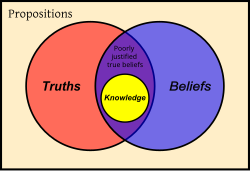 Ray's crass representation of epistemology is supposed to mislead the reader into thinking that it requires "faith" to not believe in a god. By his own standards, though, it requires "faith" to believe anything because you must be omniscient. In the very least, by his own standards "there is no god" and "there is only one god" both equally fail as statements as they require the person to be omniscient.
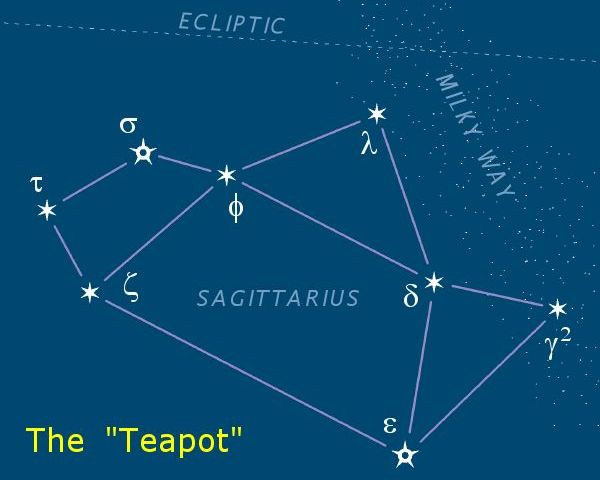 Perhaps he is only referring to "absolute statements" as those which claim the negative of something, because the positive of something requires only proof that the one thing exists. So what are some other "absolute statements"?
* Alien abductions do not occur.
* Bigfoot doesn't exist.
* There is no person who has tiedye skin.
* There is no Flying Spaghetti Monster.
* There is no china teapot orbiting Earth.
* There are no zombies.
Each one of these are "absolute statements" and thereby, by Ray's epistemological logic, require "absolute knowledge" to claim.
COMMENTARY -- Definition of Atheist
Ray, in this section, also defines an atheist as "one who knows there is no God." This is a fallacy so he can slide it into agnosticism. Atheism and theism, though, goes to what someone believes. Agnosticism and gnosticism goes to what someone knows. What someone believes requires no sort of proof. There are people in insane asylums who believe there are evil squirrels out to kill them (<-- absolute statement). Are there evil squirrels after them? No (<-- absolute statement). But that has no bearing on whether or not they believe there is such a squirrel after them. Belief and knowledge are two entirely separate things. Furthermore, the definition of atheism is not "knowing there is no god." It is simply not believing there is a god (any god). For me, I do not believe there is a god for the same reason I do not believe Bigfoot exists: there is no evidence or good reason to believe it. This is not necessarily saying that I believe there are no gods or Bigfoot, simply that I do not believe. My belief statement is also entirely different from my knowledge statement on these two items.
COMMENTARY -- Absolute Knowledge of the Antithesis
The point of this section for Ray was to try to make the reader think that claiming there is no god requires absolute knowledge while claiming there is a Christian God requires some other type of knowledge, perhaps called incomplete knowledge, partial knowledge, simple knowledge, casual knowledge, etc.
Any claim, though, is an absolute statement. If you claim absolute knowledge (omniscience) is required to know a claim is true, then you must also claim absolute knowledge (omniscience) is required to know that the antithesis is true.
We make "absolute statements" often, such as there is no china teapot orbiting Earth, if I drop a ball then it will fall to Earth (as Dinesh D'Souza often points out, we can't possibly know that it won't go straight up), etc. How do we know what we know? Rather than subscribing to Ray Comfort's handbook of epistemology, you should pick up an actual book on it. We know what we know through evidence and logic. There is no evidence or logic for the existence of god, and especially no evidence or logic for the existence of the Christian God who writes books and has sons who sacrifice themselves for an ancient man eating an apple.